Solus
Grand Prize at VentureHacks · $2,500 · ML lead, backend
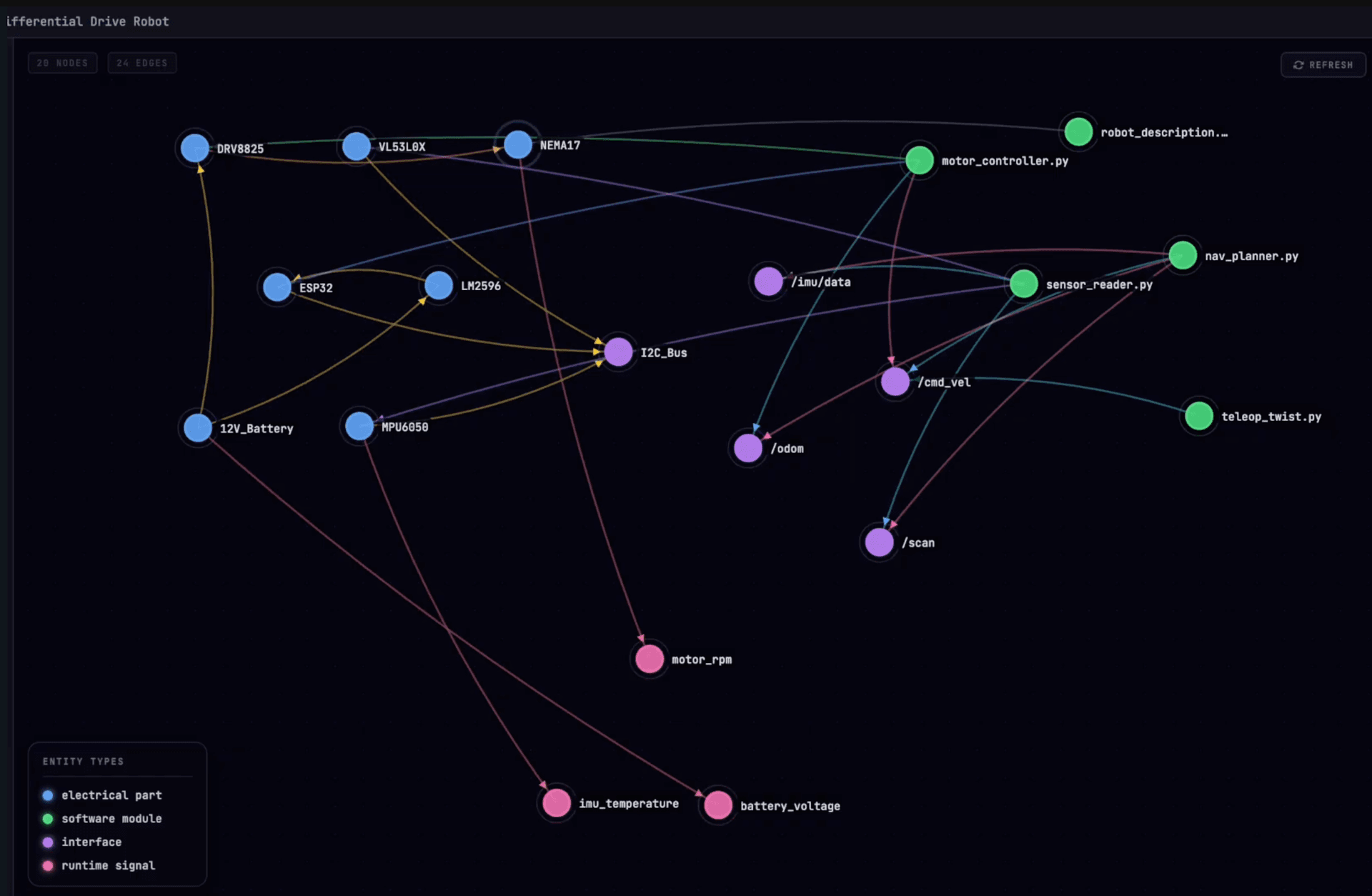
Solus is a workspace for people building robots. It treats the machine as one system: the schematics, the code, the 3D model, and the live sensor readings all sit in one map, covering 14 kinds of parts and how they connect. When someone changes a part, Solus shows what else that change affects. When something fails, it can trace the problem from a bad reading back to the hardware or the software that caused it.
Context Engine
The core of Solus is a graph database modeling 14 entity types (electrical parts, software modules, interfaces, runtime signals, ROS topics, and more) with typed relationships extracted from source integrations. Connectors ingest KiCad schematics, GitHub repos, Onshape assemblies, and PDF documentation, automatically discovering cross-domain relationships through static analysis.
When any component changes, BFS-based impact analysis traverses the graph to surface every downstream dependency, with AI-generated explanations for each affected node.
AI Agent
A 6-mode query router handles natural language questions about the system: debugging queries, architecture lookups, impact analysis, memory search, change history, and cross-domain tracing. The agent grounds every response in the knowledge graph with source pills and confidence scores.
Live Bench
A real-time telemetry dashboard streams simulated sensor data at 2Hz over WebSocket, rendering signal grids with sparkline charts and threshold-based anomaly detection. Historical issues are indexed with TF-IDF for similar issue search, linking runtime anomalies back to root causes in hardware or software.
MuJoCo Simulator
An in-browser MuJoCo WASM simulator renders the robot in 3D via Three.js, with a built-in PID auto-tuner that optimizes control parameters and shows before/after comparison against target trajectories.